As great a technological leap as the first nuclear weapons were, from an aeronautical standpoint their B-29 delivery vehicle was nearly as advanced. Development of a new “superbomber” had begun well before the American entry into the war, even as the Army Air Corps was struggling to be permitted to buy the B-17, a much more basic aircraft than what was envisioned.
The Air Corps desired an aircraft with the then staggering range of 5,000 miles, to be covered at speeds verging on 400mph, and at high altitudes that demanded pressurization. Boeing used the B-17 as a point of departure in its design studies, and used lessons learned from the commercial Boeing 307 Stratoliner. What eventually emerged on the drawing board as the Model 345 was entirely new, although the shape of the tail was the same as that of the Flying Fortress.
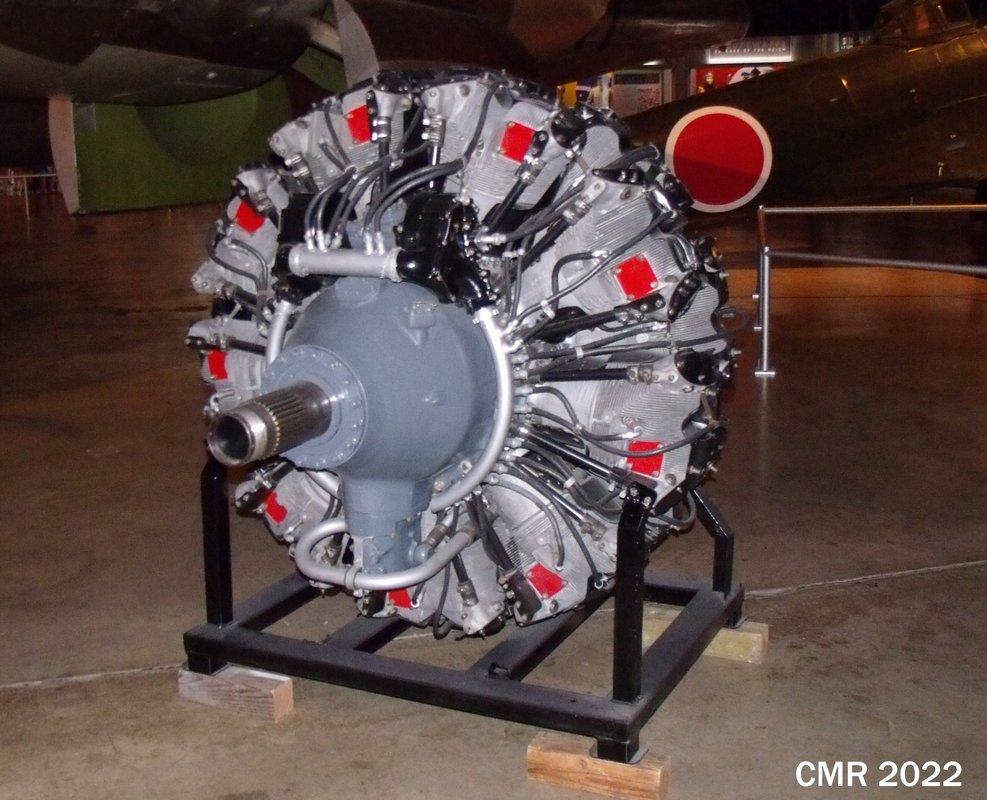
The cylindrical cross section fuselage had a forward pressurized compartment for the pilot, copilot, flight engineer, radio operator, and bombardier, with a tunnel through the two unpressurized bomb bays to the rear crew compartment, where gunners manned stations for the remotely-operated turrets. The computers used in the gun control system used sights on the waist and dorsal fuselage. There was also a manned tail turret. Powerplants were to be four of the new Wright R-3350 Cyclones; combined with huge Fowler flaps, these powerful engines would permit flight despite an immense wing loading.
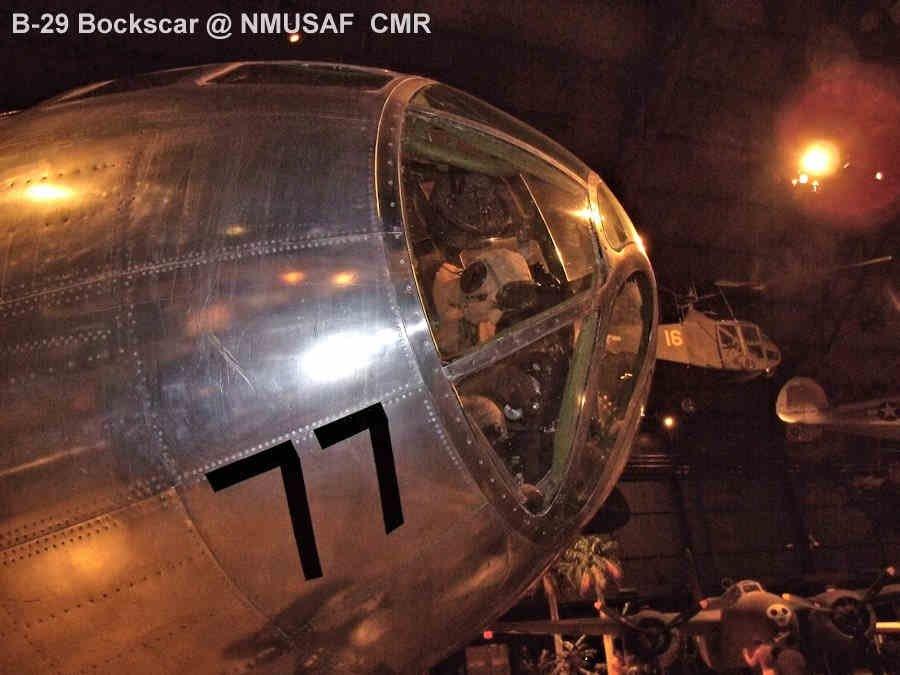
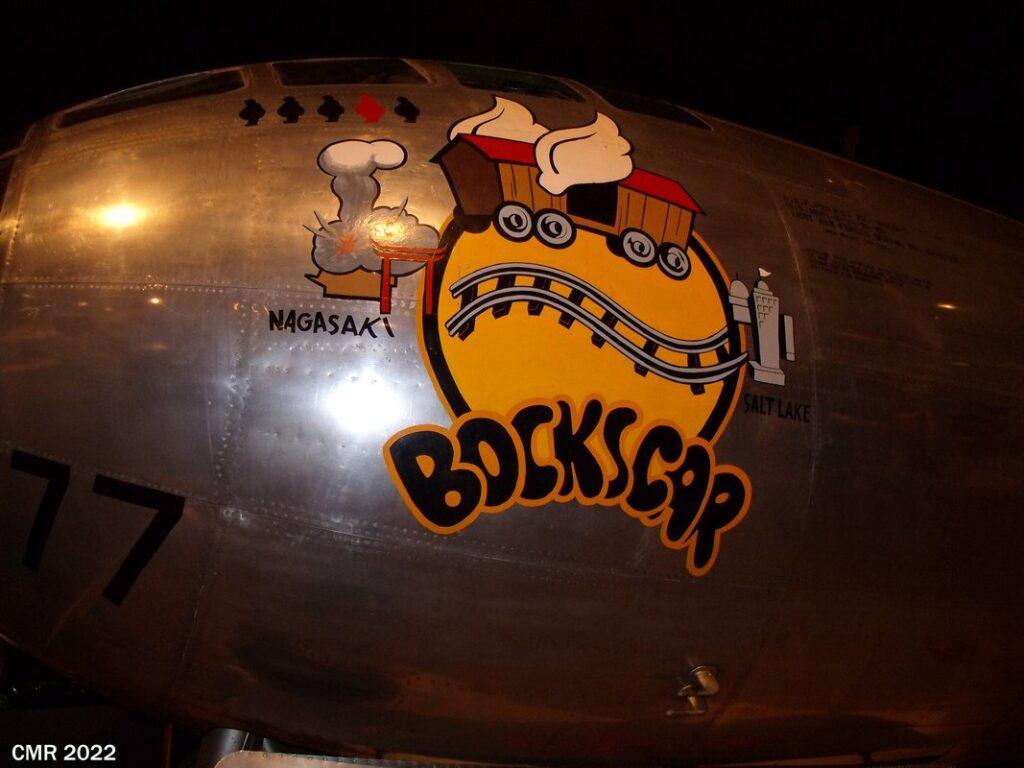
Close-up three-quarter view of the nose greenhouse glazing and bomb-aimer position of the Boeing B-29 Superfortress Bockscar (s/n 44-27297, victor number “77”) on display at the National Museum of the United States Air Force (NMUSAF). The image highlights the framed Plexiglas nose enclosure, internal Norden bombsight, black stencil victor number “77”, flush rivet rows, skin panel overlaps, and surrounding gallery exhibits in the background.
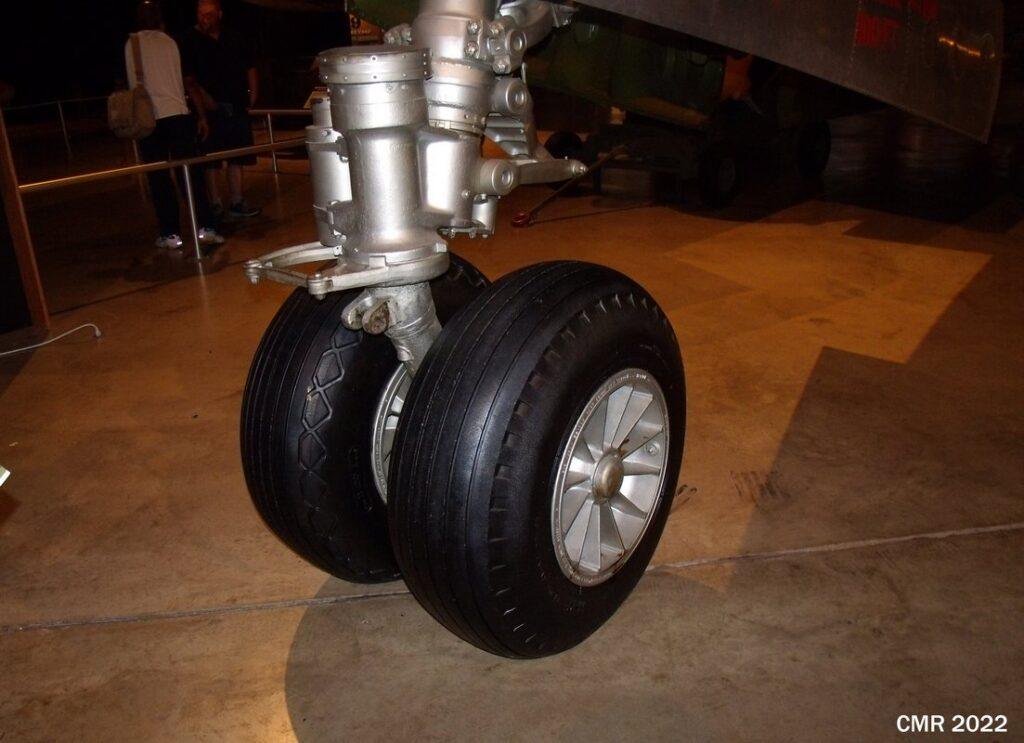
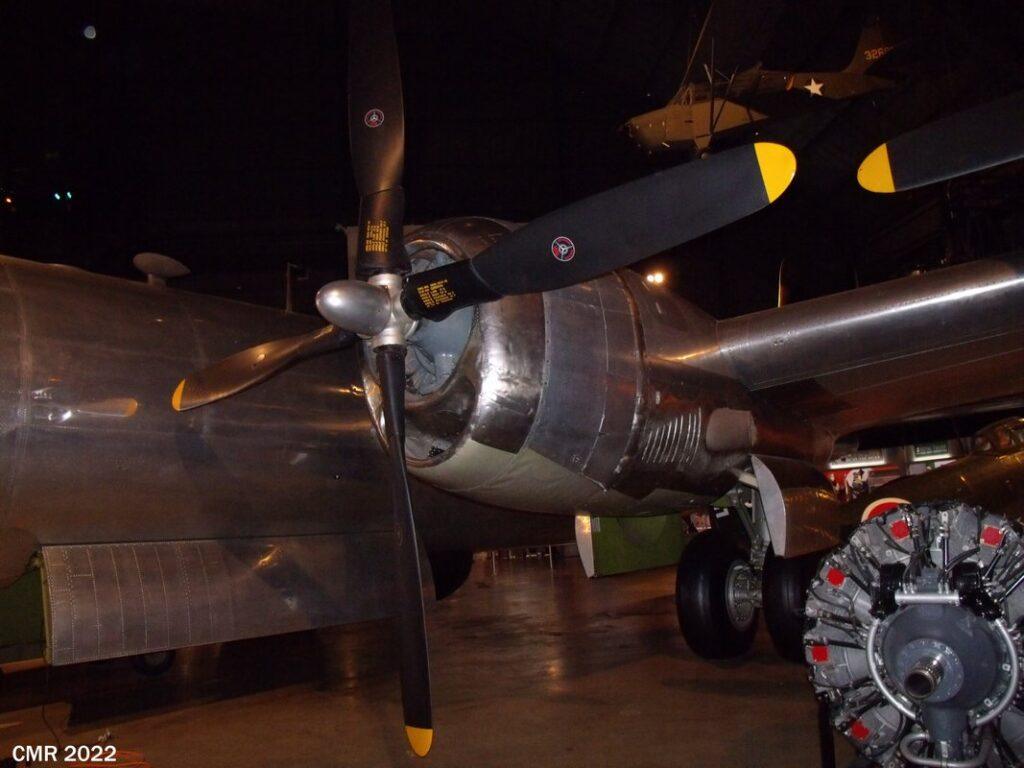
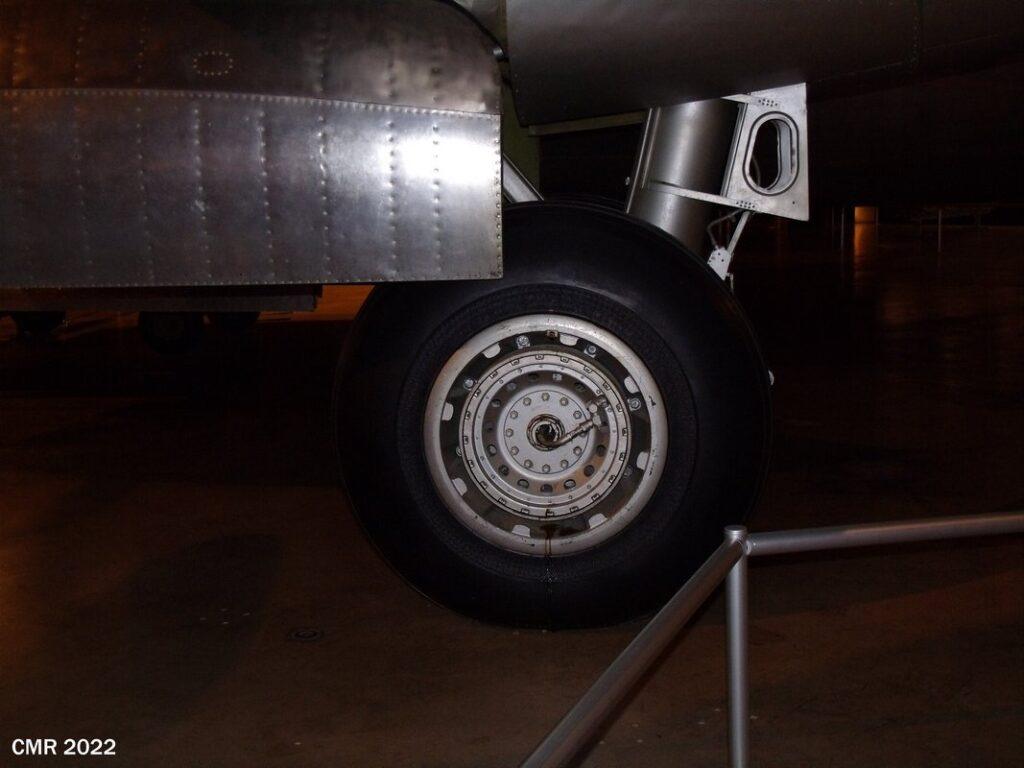
Low-angle detail view of the nose landing gear dual-wheel assembly on the Boeing B-29 Superfortress Bockscar (s/n 44-27297) on display at the National Museum of the United States Air Force (NMUSAF). The image highlights the heavy nose shock strut, steering collar, torque link linkages, wheel rim bolt-pattern, tire tread detail, and gear bay door casting framework.Three-quarter front view of the inboard starboard engine nacelle and propeller on the Boeing B-29 Superfortress Bockscar (s/n 44-27297) on display at the National Museum of the United States Air Force (NMUSAF). The photo highlights the Curtiss Electric four-blade propeller with yellow tips and manufacturer decals, Wright R-3350 Duplex-Cyclone engine cowl ring, cowl flaps, main landing gear tires, and forward fuselage skin plating.
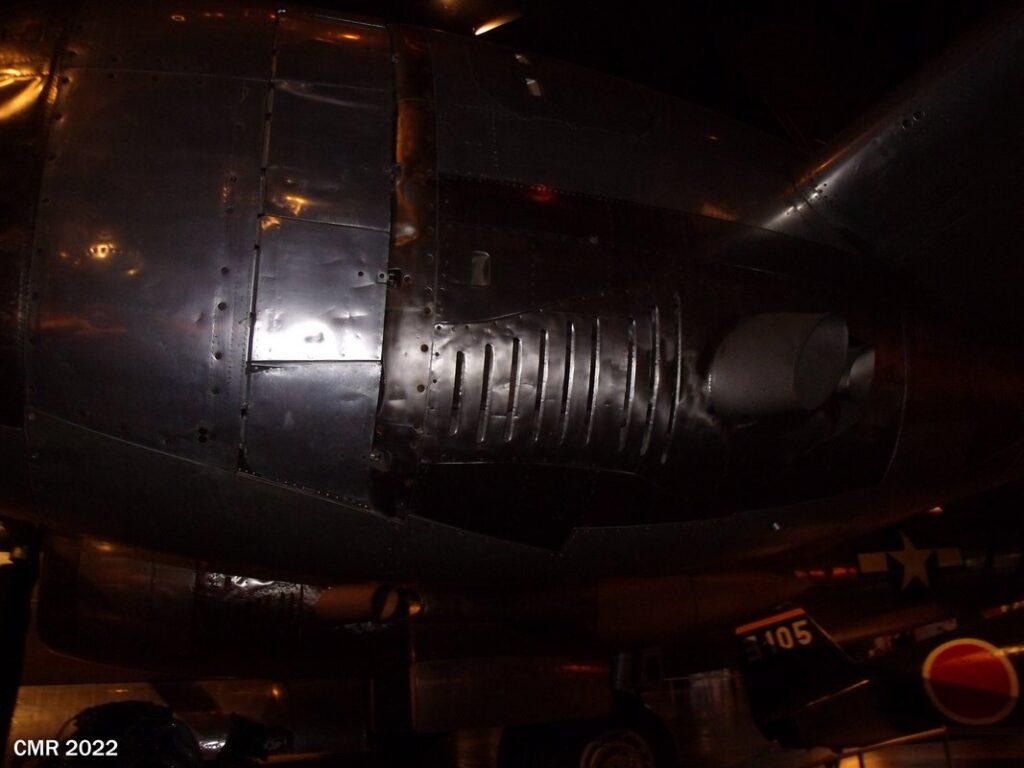
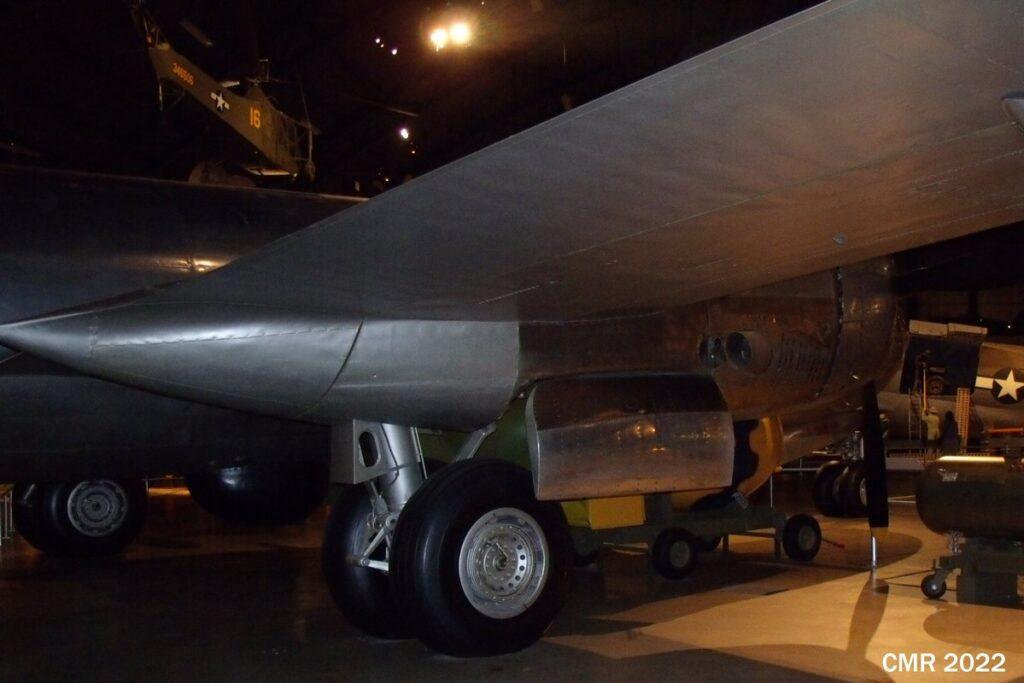
Low-angle port-side wing nacelle and main landing gear detail of the Boeing B-29 Superfortress Bockscar (s/n 44-27297) on display at the National Museum of the United States Air Force (NMUSAF). The image highlights the dual main wheel assembly, heavy gear struts, open main gear bay door, engine turbo-supercharger exhaust ports on the nacelle flank, and wing fillet sheet metal work.
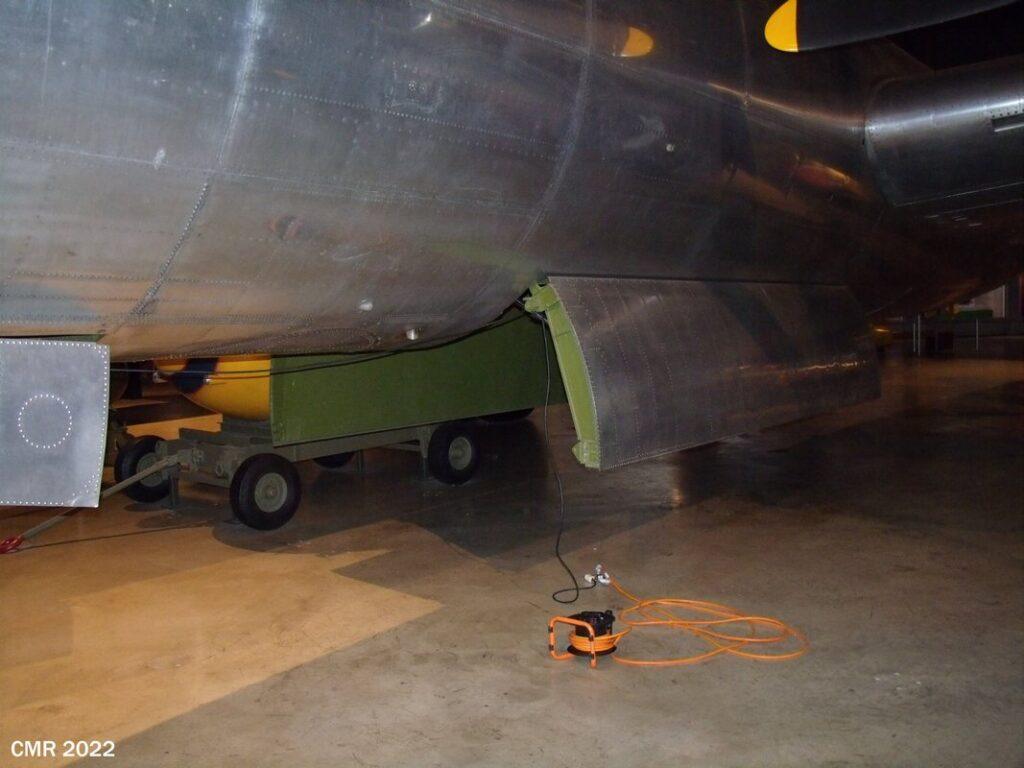
Low-angle port-side fuselage detail showing the open bomb bay doors and bomb bay interior of the Boeing B-29 Superfortress Bockscar (s/n 44-27297) on display at the National Museum of the United States Air Force (NMUSAF). The image highlights the natural metal skin plating, rivet lines, zinc chromate green interior bay lining, and a replica of the “Fat Man” nuclear bomb mounted on its transport cart underneath.